Back
Academic Engagement

Lawrence Livermore honored as one of Glassdoor's 2024 'Best-Led Companies'
Lawrence Livermore National Laboratory (LLNL) has been named a winner of Glassdoor’s inaugural award for Best-Led Companies 2024 in the United States. This award honors companies with exceptional senior leadership teams that go above and beyond to redefine the employee experience. Unlike other workplace awards, Glassdoor’s awards rely on input over the past year from…
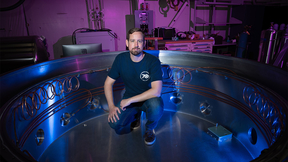
Lab scientist wins Springer Thesis Award for work in neutrino research
Lawrence Livermore National Laboratory (LLNL) postdoc Sam Hedges has won a 2024 Springer Thesis Award for his work in searching for the elusive neutrino. “I’m honored that my thesis was nominated for this award, and was excited when I found out it had won,” Hedges said. His thesis, “Low Energy Neutrino-Nucleus Interactions at the Spallation Neutron Source," highlights the…
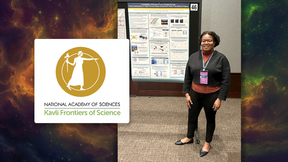
LLNL’s Raspberry Simpson named Kavli Fellow
Raspberry Simpson, a Lawrence Fellow in Lawrence Livermore National Laboratory’s (LLNL) National Ignition Facility and Photon Science (NIF&PS) Directorate, has been named a National Academy of Sciences (NAS) Kavli Fellow. As a new Kavli fellow, Simpson participated recently in the annual NAS Kavli Frontiers of Science symposium in Irvine, California. NAS invited…
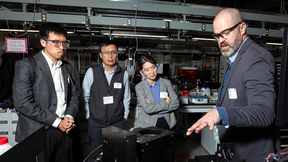
LLNL hosts Early Career Information Day focused on advanced materials and manufacturing
The University of California (UC) and Lawrence Livermore National Laboratory (LLNL) have a storied history going back to the founding of the Laboratory in 1952. The work conducted at the Lab since that time has benefited in many areas from successful collaboration with researchers and contributors within the UC system. In the spirit of continued collaboration, a UC Early…
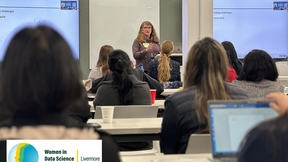
WiDS Livermore conference attendees network, share research and absorb wisdom
Lawrence Livermore National Laboratory (LLNL) recently hosted its 7th annual Women in Data Science (WiDS) conference for data scientists, industry professionals, recent graduates and others interested in the field. As an independent satellite of the global WiDS conference celebrating International Women’s Day, the Livermore hybrid event was held to highlight the work and…
March 16: 'Science at the State' blends science education and Star Trek
LLNL scientists Derek Mariscal and Dave Schlossberg will be joined on March 16 by Granada High School teacher Tom Shefler at the State Theatre in Modesto, California for “Science at the State,” a science education program pairing prominent LLNL scientists with popular films. Attendance is free for students and $5 for all others. Featuring scenes filmed at the National…
Science and Engineering Seminar Series at Las Positas College: March 13
Brian Wihl, associate program leader for autonomous sensors within the defense systems and infrastructure protection area at Lawrence Livermore National Laboratory (LLNL), will present “Ground Penetrating Radar for Explosive Hazard Detection” on Wednesday, March 13, from 6–7:15 p.m. at Las Positas College. The presentation is provided in partnership with LLNL and Las…
Registration now open for all LLNL summer education programs
Registration is now open for Lawrence Livermore National Laboratory’s (LLNL’s) summer science education programs. Programming for summer 2024 includes hands-on experiences for students that relate to several LLNL research themes. STEM with phones | July 15-19, onsite (Livermore Valley Open Campus) This free, week-long workshop will draw on high-school students’ critical…
‘Science on Saturday’ extends into March in Tracy
Lawrence Livermore National Laboratory’s (LLNL) popular outreach series, “Science on Saturday,” will continue its programming into March at the Grand Theatre Center for the Arts in Tracy, California. The talks are scheduled for March 2 and 9 and will focus on the theme “Magic of Materials.” The talks, which are geared toward middle and high school students, will begin at…
Lawrence Livermore’s popular 'Science on Saturday' lecture series returns to Las Positas College
Lawrence Livermore National Laboratory's (LLNL) popular lecture series, “Science on Saturday,” returns Feb. 3 and runs through Feb. 24. The series offers four different lectures with the theme, “Magic of Materials.” Each lecture is presented by leading LLNL researchers who are joined by high-school science teachers. Below is the schedule of lectures, which can also be…
Lawrence Livermore National Security announces recipients of the 2023 Community Gift Program
Lawrence Livermore National Security, LLC (LLNS), the contract manager for Lawrence Livermore National Laboratory (LLNL), has announced the recipients for the 2023 LLNS Community Gift Program. These gifts, totaling $220,000, reflect LLNS' commitment to local communities. LLNS received applications totaling more than $978,000 in requests. Forty-six applications were…
Radiochemistry intern digs deep to prevent the spread of nuclear waste
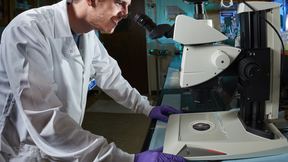
The groundbreaking discoveries and scientific advancements that take place at Lawrence Livermore National Laboratory (LLNL) and across the broader national laboratory system rely on the passage of information from tenured staff scientists to new interns and early career scientists. This past summer, Zachary (Zach) Murphy, a Ph.D. student studying chemistry at the…
Two selected as Graduate Student Research program recipients
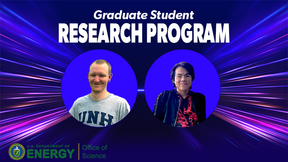
Two graduate students have earned Department of Energy (DOE) Office of Science Graduate Student Research (SCGSR) Program awards to perform their doctoral dissertation research at Lawrence Livermore National Laboratory (LLNL). The prestigious award helps cover living expenses and travel for 60 students from universities across the nation. Their proposed research projects…
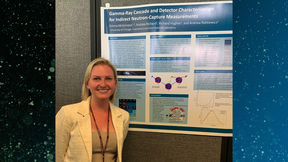
Summer student work helps calculate neutron-capture reactions
Neutron-capture reactions on unstable nuclei play a key role in the production of heavy elements in the universe and provide vital diagnostics for reaction networks related to stockpile stewardship. However, these reactions cannot be measured directly because they involve radioactive nuclei. Lawrence Livermore researchers have performed indirect measurements to constrain…
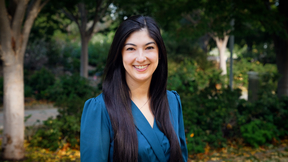
All eyes on Lauren Sylvia Abrahams
Lauren Sylvia Abrahams’ upbringing in a Mexican Jewish household shaped how she interacts and works with people by having a better understanding of their lived and learned experiences. Abrahams’ biracial and multiethnic background and passion for higher education have been the foundational pillars of her interest and work in inclusion, diversity, equity and accountability …
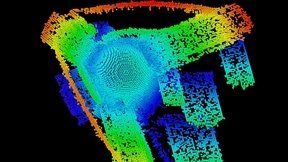
Understanding the plasticity of diamond for improved fusion ignition
Alex Li, a Lawrence Livermore National Laboratory (LLNL) summer student in the Computational Chemistry and Materials Science Summer Institute, recently led a study published in the journal Matter to investigate the evolution of plasticity in diamond along different loading orientations and the effects that voids (pores) within the material can have on stresses within the…
Three graduate students earn awards to work at Lawrence Livermore
Three graduate students have earned Department of Energy Office of Science Graduate Student Research (SCGSR) Program awards to perform their doctoral dissertation research at Lawrence Livermore National Laboratory (LLNL). They are three among the 87 graduate students representing 33 states for the SCGSR program’s 2022 Solicitation 2 cycle. Through world-class training and…
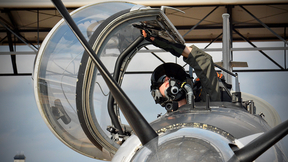
Beating the odds: Former Energetic Materials Center intern named U.S. Air Force Cadet of the Year
Second Lt. Hannah Fletcher, a 2021 Lawrence Livermore National Laboratory (LLNL) Reserve Officer Training Corps (ROTC) summer intern, has been named the 2022 United States Air Force (USAF) Cadet of the Year. This award recognizes the best cadet in an Air Force commissioning program based on military performance, academics and physical fitness. LLNL’s ROTC internship…
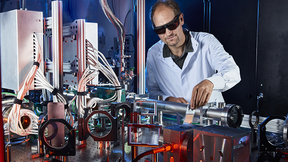
'Twisted' laser light experiments offer new insights into plasma physics
Electromagnetic vortices occur naturally throughout the universe and have recently been observed in association with black holes. Over the last decade, scientists have sought methods to investigate how extremely strong electromagnetic vortices interact with matter, specifically plasma, in a laboratory setting. Plasma, known as the “fourth state of matter,” makes up nearly…
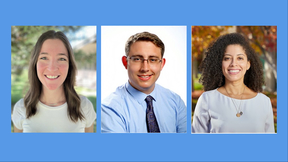
PLS postdocs to compete in the 2022 Bay Area Research Slam
On September 20, LLNL hosted its annual Postdoc Research Slam. This Lab-wide competition encourages postdocs to showcase their research in a three-minute presentation that answers the question, “Why is my research important?” The event gives postdocs the opportunity to improve their communication and speaking skills and challenges them to articulate their research in an…