Back
Biosciences and Biotechnology

GUIDE team develops approach to redesign antibodies against viral pandemics
In a groundbreaking development for addressing future viral pandemics, a multi-institutional team involving Lawrence Livermore National Laboratory (LLNL) researchers has successfully combined an artificial intelligence (AI)-backed platform with supercomputing to redesign and restore the effectiveness of antibodies whose ability to fight viruses has been compromised by…

Brain-on-a-chip: Improving 3D neural network analysis
Brain-on-a-chip (BOC) systems are engineered cell-culture models that allow non-invasive, real-time monitoring of electrochemical processes. While newer 3D BOC systems have improved the neuronal viability, neural network activity, drug responses, and resemblance to disease pathology compared to their 2D counterparts, the ability to monitor the functional dynamics of the…

Anti-tumor immune responses in pancreatic cancer
Pancreatic ductal adenocarcinoma (PDAC) is one of the deadliest types of cancer with a limited survival rate of about 10% over five years. In general, by the time a patient presents symptoms, the disease has advanced to a surgically unresectable stage and likely metastasized to other vital organs leading to rapid mortality. Since conventional chemotherapy prolongs patients…
Celebrating LLNL researchers on World Intellectual Property Day
World Intellectual Property (IP) Day is Friday, April 26. World IP Day shines a light on the important role innovation plays in achieving the United Nations’ (UN) 17 Sustainable Development Goals (SDGs), which aim to create a better future for everyone by protecting the planet. Lawrence Livermore National Laboratory’s (LLNL)’s Innovation and Partnerships Office (IPO) is…
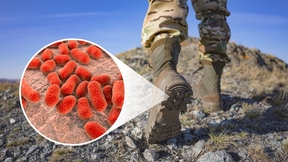
Mitigating the risk of infection in combat-related injuries
The severely invasive nature of combat trauma creates massive regions of injury, colonization and infection, requiring specialized diagnostic and aggressive therapeutic approaches. Previous reports indicate an estimated occurrence of wound infections in 18%–25% of combat-related injuries. Hindering wound recovery are multidrug-resistant microorganisms, which have been…
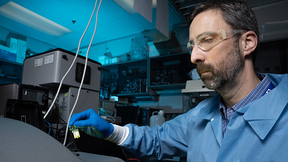
LLNL researcher, business development executive capture technology transfer award from consortium
A Lawrence Livermore National Laboratory (LLNL) researcher and a colleague who helped him and his team commercialize their biomedical technology have garnered a national technology transfer award. The award, from the Federal Laboratory Consortium (FLC), represents the 42nd technology transfer award that LLNL has won from the FLC since 1985. LLNL biologist Nicholas Fischer,…
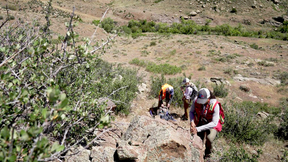
Concentrating on rare-earth elements
Using a bioengineered protein-based technology, Lawrence Livermore National Laboratory (LLNL) scientists and collaborators will develop a new separation technique that ultimately will increase the concentration of rare-earth elements (REE) so they are more readily available to the defense sector. Under the Defense Advanced Research Projects Agency (DARPA) Environmental…
Algal activities shape surrounding bacterial communities
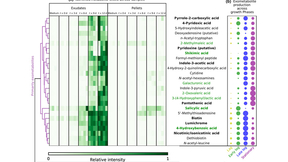
Microalgae play important roles in global carbon cycling and industrial applications for bioproduct and biofuel production. As with land plants and other host–microbial systems, microalgal activity, productivity, and stability are closely tied to surrounding microbial communities. However, a predictive understanding of microbial community interactions with algae is still…
‘Science on Saturday’ extends into March in Tracy
Lawrence Livermore National Laboratory’s (LLNL) popular outreach series, “Science on Saturday,” will continue its programming into March at the Grand Theatre Center for the Arts in Tracy, California. The talks are scheduled for March 2 and 9 and will focus on the theme “Magic of Materials.” The talks, which are geared toward middle and high school students, will begin at…
Using agricultural residues for fuel and chemicals
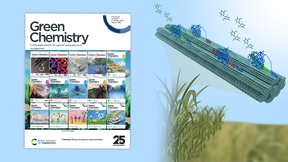
A Lawrence Livermore National Laboratory (LLNL) scientist is part of a research team shedding new light on how to access the sugars locked up in plant materials in order to convert byproducts into new feedstocks for production of fuels, materials and chemicals. Converting grasses, weeds, wood and other plant residues into sustainable products normally produced using…
Lawrence Livermore’s popular 'Science on Saturday' lecture series returns to Las Positas College
Lawrence Livermore National Laboratory's (LLNL) popular lecture series, “Science on Saturday,” returns Feb. 3 and runs through Feb. 24. The series offers four different lectures with the theme, “Magic of Materials.” Each lecture is presented by leading LLNL researchers who are joined by high-school science teachers. Below is the schedule of lectures, which can also be…

Synthetic antibacterial minerals combat topical infections
The development of new antibiotics has stalled — new strategies are needed as the world enters the age of antibiotic resistance. To combat this challenge, Lawrence Livermore National Laboratory (LLNL) scientists have found that synthetic antibacterial minerals exhibit potent antibacterial activity against topical MRSA infections and increase the rate of wound closure…
Two selected as Graduate Student Research program recipients
Two graduate students have earned Department of Energy (DOE) Office of Science Graduate Student Research (SCGSR) Program awards to perform their doctoral dissertation research at Lawrence Livermore National Laboratory (LLNL). The prestigious award helps cover living expenses and travel for 60 students from universities across the nation. Their proposed research projects…

PLS postdocs excel at the 2023 Research Slam
On Thursday, August 24, a dozen LLNL postdocs presented in the annual Postdoctoral Research Slam, answering the question “Why is my research important?” in only three minutes. Each talk was then evaluated by LLNL leadership, awarding first and second place to PLS postdocs Brandon Zimmerman and Aditya Prajapati, respectively. As a bonus, the attending audience voted on…
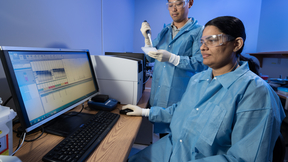
LLNL scientists use engineered bone marrow for cancer research and treatment
Osteosarcoma (OS) is the most common primary malignant bone cancer in children and adolescents. While many other cancers now have promising therapeutic advances, treatment options for OS have remained unchanged since the introduction of standard chemotherapeutics and offer less than a 25% five-year survival rate for those with metastatic disease. Now, Lawrence Livermore…
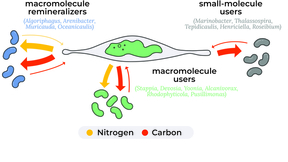
Not all bacteria are created equal
Lawrence Livermore National Laboratory (LLNL) scientists have found that bacteria can help algae make carbon-neutral biofuels or draw down additional carbon from the atmosphere if the conditions are just right. The team used LLNL’s nanoSIMS to understand and quantify the role of the algal microbiome in processing algal carbon (C) and nitrogen (N). The research appears in…
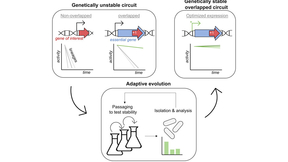
Overlapping genes for prolonged genetic circuit stability
For the past several decades, synthetic biologists have sought to genetically engineer microorganisms for a wide range of application—including therapeutics discovery and delivery, drug manufacturing, agricultural yields, biofuel production, mineral extraction, and waste degradation. This is achieved through the design of genetic circuits, which are made up of DNA parts…
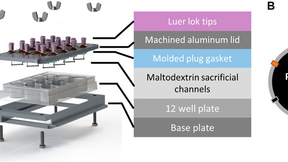
Platform tests colorectal cancer therapies in vitro
Colorectal cancer (CRC) — cancer of the colon or rectum — is the third-most common cancer in both men and women in the United States and the second-most common cause of cancer-related death in developed countries. Although surgery is highly successful for patients with a localized disease or disease confined to a narrow region (stages I–III), a total of 60% of CRC patients…
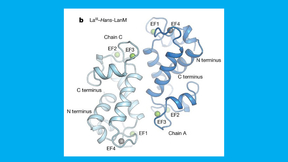
Enhancing rare-earth element separation
The irreplaceable roles of rare-earth (RE) elements in ubiquitous modern technologies ranging from permanent magnets to light-emitting diodes (LED) and phosphors have renewed interest in one of the grand challenges of separation science—efficient separation of lanthanides. However, the separation of these 15 elements is complicated due to their similar physicochemical…
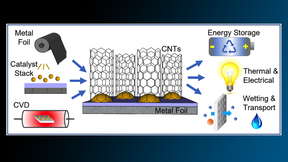
Researchers address the challenges in creating carbon nanotubes on metal foil
Carbon nanotubes (CNTs) provide extraordinary electronic, thermal, mechanical, and transport properties, among many other benefits. Vertically aligned CNT (VACNT) forests have promising potential applications ranging from energy storage to multifunctional fiber production. While CNTs are traditionally made on substrates such as silicon, the process is not compatible with…